




SEDIMENTATION(S)
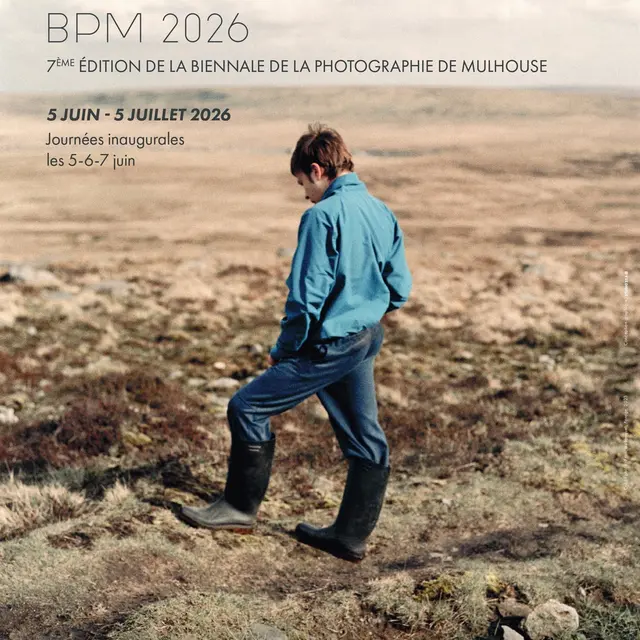
Through 12 exhibitions, the Biennale de la Photographie de Mulhouse 2026 presents the work of over 50 artists and students from the Écoles Supérieures d'Art du Grand Est.
This edition of the Biennale de la Photographie de Mulhouse invites us to explore terrestrial and mental geographies, drawing on notions of sedimentation, stratification, matter-flux and the plasticity of collective and individual memories.
The theme is linked to the geographical location of Mulhouse, the festival city. 33 million years ago, the Alsace plain was a sea bed. This sea deposited thick layers of limestone and marl around Mulhouse. This perpetual action of combined flows and sediments, this living geological organism has marked the territory and its inhabitants in its topographical expression, as a backdrop to many lives. These sedimentation phenomena are part of a living, collective and cultural history. Inhabitants exploit them as mineral resources, to create shelter, but also to explore their own histories and stories over the millennia.
Like these sedimentation phenomena, this 7th edition brings together photographers who explore the past, interested in geological excavations as much as memorial ones. Mining, excavating and digging are all methods of investigation, enabling us to explore both the earth and the mind. The exhibitions interweave collective narratives and the interconnections between individual and collective, human and non-human histories.
Entrée libre
Through 12 exhibitions, the Biennale de la Photographie de Mulhouse 2026 presents the work of over 50 artists and students from the Écoles Supérieures d'Art du Grand Est.
This edition of the Biennale de la Photographie de Mulhouse invites us to explore terrestrial and mental geographies, drawing on notions of sedimentation, stratification, matter-flux and the plasticity of collective and individual memories.
The theme is linked to the geographical location of Mulhouse, the festival city. 33 million years ago, the Alsace plain was a sea bed. This sea deposited thick layers of limestone and marl around Mulhouse. This perpetual action of combined flows and sediments, this living geological organism has marked the territory and its inhabitants in its topographical expression, as a backdrop to many lives. These sedimentation phenomena are part of a living, collective and cultural history. Inhabitants exploit them as mineral resources, to create shelter, but also to explore their own histories and stories over the millennia.
Like these sedimentation phenomena, this 7th edition brings together photographers who explore the past, interested in geological excavations as much as memorial ones. Mining, excavating and digging are all methods of investigation, enabling us to explore both the earth and the mind. The exhibitions interweave collective narratives and the interconnections between individual and collective, human and non-human histories.
Entrée libre